Trust and data
You’re trusting us with information about the people you serve. Here is how we handle it.
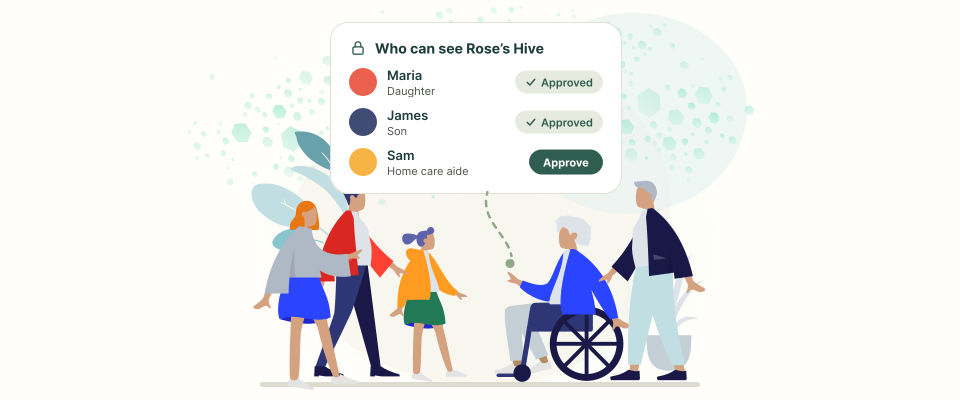
HealthHive is built on a simple arrangement. Each person you serve owns their Hive, the shared space that holds their information, and decides who joins it. Your organization controls what it shares from its own records, including, where HIPAA permits, with the community organizations helping coordinate that person’s care. Every disclosure is recorded, and the person can see it in their Hive.
Ownership and consent
Who owns what
Consent is the foundation of every connection in HealthHive. Consent management is built in, not a checkbox added at the end.
The person you serve owns their Hive
Only they, or a legally authorized Co-Owner such as a health care proxy, decide who can join their Hive and what each member can see and add.
Your record stays yours
Your EHR remains your system of record. Your organization has access to a Hive for as long as the individual grants it, and keeps its own copy of what it received, including audit logs, if access is later withdrawn.
You decide who on your team sees it
Once a person consents to connect with your organization, you control which of your users can see their Hive, under your business associate agreement.
Care coordination under HIPAA
When your care team shares for care coordination
HIPAA permits a care organization to share some of its own records with community organizations, social service agencies and home and community-based services (HCBS) providers that help coordinate a person’s care. When your organization does this through HealthHive, it happens in the open.
What can be shared
Only information from your organization’s own records, limited to what the receiving organization needs to coordinate care.
With whom
Community-based organizations, social service agencies and home and community-based service providers serving that person.
What is never shared this way
Anything the person, their family or other care partners added to the Hive, and records that other laws require the person to authorize, such as substance use disorder treatment records.
What the person sees
Each disclosure is logged in their Hive: what was shared, with whom and when. They can ask your organization to restrict future sharing.
Security and compliance
The protections behind it
The controls a careful health care organization expects, and documentation to back them up.
Built to HIPAA requirements
Business associate agreements with our customers and with the vendors we rely on.
SOC 2 Type I
Independently audited. Our SOC 2 Type II audit is underway.
Penetration testing
Penetration tests are run at regular intervals by an independent third party.
Encryption
Protected health information is encrypted in transit and at rest.
U.S. data storage
All customer data is stored in the United States.
Plain answers
What security and privacy teams usually ask
Do you sell data or share it with third parties?
We never sell data. Information reaches other people and organizations in two ways: when the person approves it, or when their care organization shares its own records for care coordination, as HIPAA permits. Both are logged, and the person can see them in their Hive.
What happens when someone withdraws access?
Your organization’s access to their Hive ends, and you keep your own copy of what you already received, with its audit history. Withdrawing access to their Hive does not stop a care organization from sharing its own records for care coordination as HIPAA permits; the person can ask that organization to restrict it.
How long is data kept?
Retention of your organization’s data is set out in your agreement with us.